

Quick links:
- What does a water bill cover? And how is your water bill calculated?
- Will a water meter save me money?
- Average water bills by household and property size
- Setting up your water bill
- Why is my bill higher?
- Smart solutions to reduce your water bill
- Budget better with one monthly bill
The national average water bill for 2025/26 was £603 per year, according to Water UK, and this tends to increase each year. For 2026/27, the average bill is expected to rise 5.4% to £639 per year, which is an increase of around £2.70 per month.
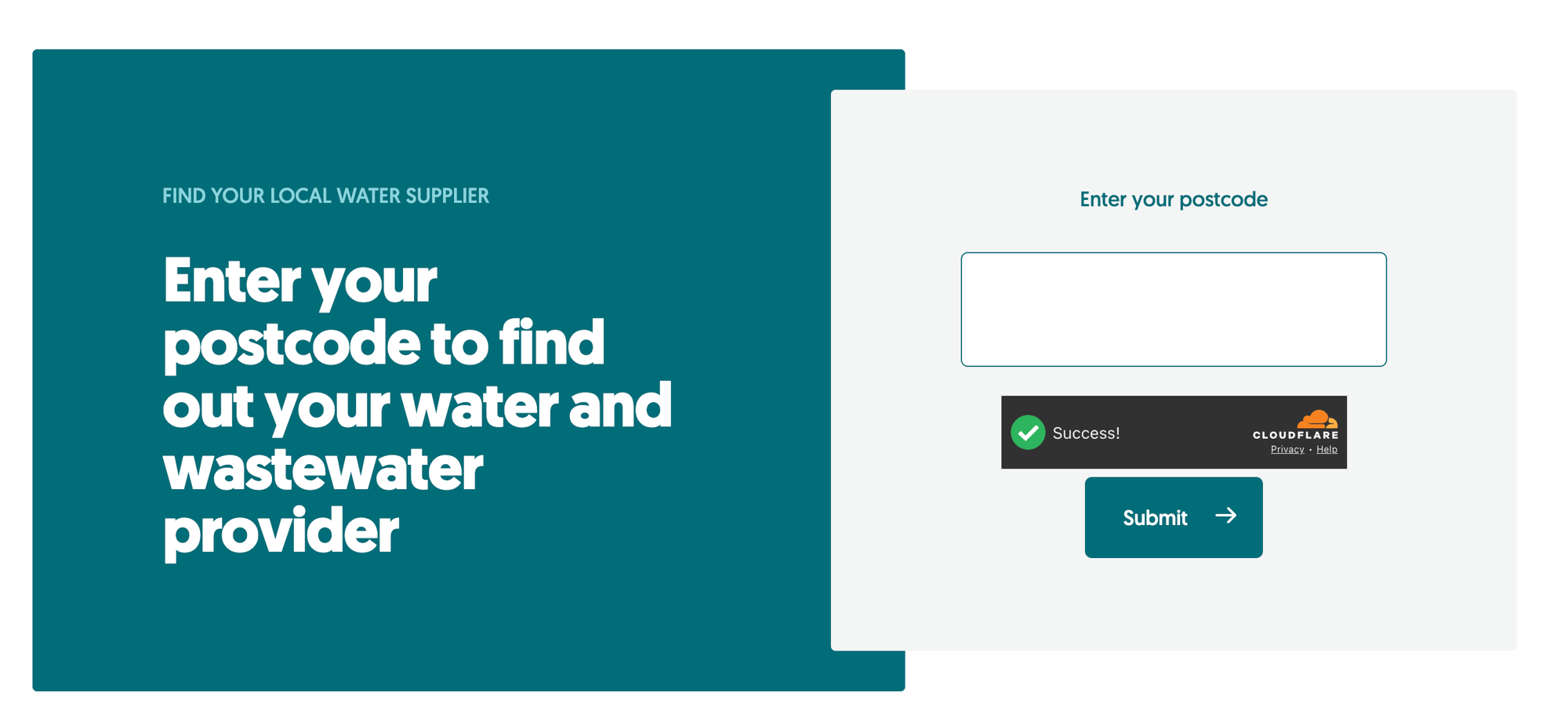
Water bills vary across the UK. You don’t get to choose your supplier because each region only has one. You can find out who supplies your water here.
Northumbrian Water has the cheapest annual bill of all the UK’s water and wastewater companies, with the cost for the coming year at an average of £535, and Southern Water is the most expensive at £759.
These figures are just averages, and even within a single region, a lot of factors affect the price of water, including the size of the household and whether you have a water meter.
Given that water bills are on the rise, it’s important to understand how water bills are calculated and if there is anything you can do to keep costs down.
This guide covers how water bills work, how to manage your payments, and even a few tips for keeping water costs under control.
A water bill covers:
- Fresh water usage: e.g. for drinking, bathing, etc.
- Wastewater removal: e.g. for toilets, drains, etc.
- Maintenance of waterworks and sewer-works in your area
- Admin costs: e.g. billing and metering
Your water bill is calculated in one of two ways: using a water meter, which means you pay for how much you use, or based on the property’s ‘rateable value’.
💦 Water bills with a water meter
A water meter tracks your water usage, so you only pay for the water you use. If you have a water meter, you submit meter readings to your water company to keep your bills accurate.
With a water meter, a bill typically covers:
- Water usage: A volumetric charge calculated by the meter
- A standing charge: A fixed charge to cover administrative costs, management of the meter, etc.
- Wastewater charges: This is a standard rate that covers foul sewage, surface water drainage, and highway drainage.
💧Water bills without a meter
Unmetered bills are made up of the following costs:
- Rateable value charge: based on the rateable value of your home from before 1990
- Standing charge: which covers admin costs like billing and customer service
The rateable value might be split by water and sewerage, either to the same company or to different ones, depending on where you live. But it all comes under one bill. For unmetered homes, prices are fixed for a year.
Rateable values are based on calculations pre-1990, because this is the data available to the water companies, before the privatisation of water. Any changes to your home since 1990 won’t be taken into account.
If you think your rateable value is too high based on the current value of your home, you can get in touch with your water company and appeal to them.
👀 Water and wastewater companies vs. water only?
Some companies provide both water and wastewater services, while others only provide water. If you live in an area where only water is covered, then your wastewater will be provided by another company.
For example, in Bristol, water is provided by South West Water, and Wessex Water covers the majority of sewerage services. Water UK’s postcode checker will confirm who supplies what to your property.
🧠 About water meters
If your home was built after 1990, you should have a water meter. Older properties could also have one if the previous owner had one fitted.
Water meters aren’t a national legal requirement, in some regions they are compulsory. This applies to regions where water is scarce (or ‘serious water stress’). Check with your water supplier to find out if this applies to your home
Can’t find your meter? You’ll normally find it under the kitchen sink or in the garage. You can also ask the previous owner or neighbours, who might have theirs in a similar place.
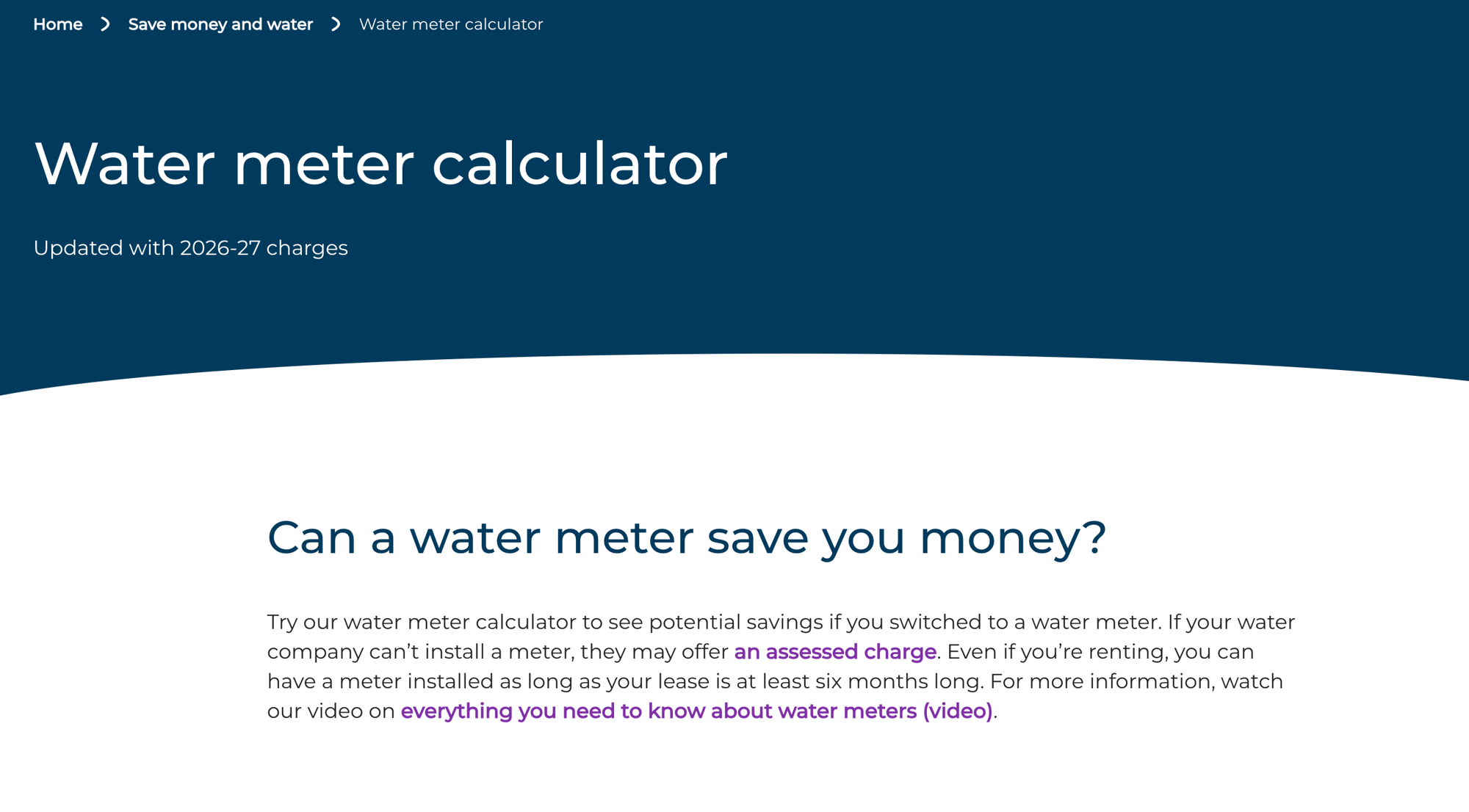
A water meter could save you money if you’re a small household, or your water consumption is low. Basically, it depends whether you use less water than you pay for on a standard charge. See the table below for more info 👇
Check out this calculator from the Consumer Council for Water to see if you could save money with a meter.
A water bill is an annual bill covering usage and standing charges (for metered properties), or rateable value charges and standing charges (for unmetered homes). The prices are fixed for the year, but water companies encourage you to pay monthly via Direct Debit.
You can also roll your water bill into your other utility costs with a bills package from One Utility Bill. This means one monthly payment that covers gas and/or electricity, plus your choice of water, broadband, TV licence and TV package Get a quote here.
The start of this guide covered the average water bill for a household in the UK. Of course, because it’s an average, the cost could vary wildly depending on many factors.
Here are some more specific scenarios so you can see how much it might cost. All of these examples are for metered properties, and are based on an average consumption of a household of this size. This could vary based on region and lifestyle.
This table includes the most expensive supplier and the least expensive to show the range of costs!
|
Household Type |
Water Usage (m³/year) |
Southern Water – Estimated Annual (£) |
Southern Water – Estimated Monthly (£) |
Northumbrian Water – Estimated Annual (£) |
Northumbrian Water – Estimated Monthly (£) |
|
One-bedroom (1 person) |
60 |
£550 |
£46 |
£357.55 |
£29 |
|
Two-person household |
100 |
£796 |
£64 |
£472.76 |
£39 |
|
Four-person household |
160 |
£1,145 |
£95 |
£645.32 |
£54 |
1️⃣ Average water bill for a one-bedroom flat
According to Southern Water, a single person is estimated to use about 60 cubic metres of water per year, or about 178 litres per day. The average annual bill for a single person on Southern Water is £550 for water and wastewater services, that’s £46 per month.
Some regions are considerably cheaper. Northumbrian Water charges £357.55 for 60 cubic metres, or £29 a month.
For a single person living in a one-bedroom flat, your monthly water bill could be anything between £29 and £50 per month, likely less than you’d pay in an unmetered property.
2️⃣ Average water bill for a two-person household
In a home with two people, you can’t just double the usage to estimate costs. Some water usage will be shared, such as the dishwasher and washing machine, and while two people use more than one for these appliances, it’s unlikely to be double. The same data from Southern Water estimates 100 cubic metres for two people, about 40% more. That would cost £796 per year and £64 per month. By contrast, Northumbrian Water would charge £472.76 for the same usage, around £39 per month.
4️⃣ Average water bill for a family of four
For a four-person household, Southern Water estimates 160 cubic metre usage per year, costing £1,145 per year (£95 a month). Northumbrian Water charges £645.32 for the same amount, or about £54 per month.
Hopefully these examples show the huge variation in water costs, depending on location, who you live with, and your lifestyle. You can’t choose to move to another supplier, but you can take steps to reduce your usage, and this will save you money if you’re on a meter. There are tips for reducing your water bill in the last section of this article 👇
There’s tons to sort when you’re moving house, and key utilities like water bills should be one of the first on the list. Here are some simple steps for setting up your water bill:
- Take a dated photo of your water meter (if you have one) as soon as you move in. This will make sure you only pay for what you’ve actually used.
- Make an account with your local water company (use the postcode checker if you’re not sure).
- You can also create a bills package with One Utility Bill and combine your water bill with other utilities so you know exactly how much you’ll be paying each month. The team will handle the rest of the setup for water, and your other chosen utilities too.
- Set up a payment method; Direct debit is always preferred to make sure you never forget to pay.
- Submit meter readings when your supplier asks, and keep an eye on your usage to avoid significant increases
Get a detailed step-by-step in our handy guide to setting up your water bill.
If your water bill has increased, or you pay more than your neighbours, there are a few possible reasons why:
- Your usage has increased
- You have more or less credit in your account
- Your water company has increased rates
- You are unintentionally wasting water
The biggest factor for water bills is your region. Some areas are simply more expensive than others. But even within the same locality, prices can vary, due to usage and rateable values (household value).
Much of it is outside of your control, but there are still some steps you can take to save money…
A couple of key factors to consider are:
- Direct debit discounts: Some suppliers will offer a very small annual discount if you pay via Direct Debit (Very small, about £5 a year, or 40p a month).
- Appeal your rateable value: If you’re in an unmetered home and don’t think your rateable charge represents your property, then you can ask your supplier to look at it again, which could bring down your costs.
- Make a smart choice between metered and unmetered: For low-consumption homes, meters are cheaper, but if you have a big family, it might be better to go with your rateable value. That being said, you might not have a choice if you live in a property with a water meter or an area with water scarcity issues.
To make things clear, the main way to save money is to simply use less water. This means having a water meter and being smart about how you consume water. Here are our top tips for pulling the plug on high water usage:
- Speak to your supplier about free water-saving gadgets, such as efficient shower heads, tap aerators, and cistern bags.
- Only use a dishwasher when it’s full, and go back to handwashing for smaller numbers of dishes. Some dishwashers have an eco setting too, which can also use less water.
- Use the eco setting on your washing machine when you can. It uses less water, and uses less energy too!
- Take quick showers, and make baths a treat.
- Turn off the tap when you’re brushing your teeth or washing your face.
- Reuse water, like rinsing tins for recycling with used dishwater, instead of fresh tapwater.
- Collect rainwater for watering plants and grass.
- Fix leaks as soon as possible.
The tips above are just some ideas to keep your water bill down. Visit your supplier’s website for a tailored list of tips.
Struggling to pay your water bill?
Here are a few things that might help:
- Low-income discounts: Water suppliers offer a 50% discount for those living on a low income. You’ll need to contact your provider directly to find out if you qualify.
- WaterSure scheme: Find out if you qualify for the scheme, and how to apply on the Citizens Advice website.
- Other payment options: Contact your supplier directly to ask how they can support you in paying your bill.
Combine your utilities into one monthly payment with a bills package from One Utility Bill to simplify your finances and make it easier to track your outgoings.
Bundle energy with your choice of: