

Quick links:
- The state of broadband costs in the UK
- Breaking down costs by speed and technology
- Extra broadband costs
- Regional pricing variations: Is London broadband more expensive?
- How to reduce your broadband bill (beyond just switching)
- How to streamline broadband setup with One Utility Bill
Most people work, shop and stream online, so reliable internet that fits your budget is an essential.
So how much will it cost to get online with fast and reliable broadband? The average broadband cost in the UK is around £30–£36 a month at the time of writing, but your actual price will depend on your location, and the broadband deal you choose. Things like bandwidth and contract length make a big difference to your monthly cost.
For a new customer deal, you might find a deal under £30 a month. But if it’s been a while since you switched suppliers or reviewed your package, you might be paying the ‘loyalty penalty’ and pay more than £50 a month.
The amount you pay for broadband depends on a few factors, including:
- Your contract length
- Your chosen speed
- Your supplier
- Your bandwidth
- Where you live
- Your payment method
So, whether you’re moving to a new place or just want a better deal, keep reading to learn about the average broadband costs and get some tips for securing the best value fibre deals.
There are lots of factors that affect broadband pricing. The average broadband cost is around £30–£36 per month, but that could be too high or too low for the bandwidth you need and contract type.
Let’s take a look at what impacts the price:
🏃♂️ Speed
Broadband speed is measured in megabits per second (Mbps) and affects how quickly you can stream, browse, and download online.
The average broadband speed in the UK is around 65–70 Mbps, which is enough for most households. In general, higher speeds cost more, but be realistic about how much you actually need, rather than just going for the highest number. Paying for more speed than you need can make your bill more expensive with no actual benefits.
Broadband speeds usually fall into three groups:
- Standard broadband (10–30 Mbps): best for light browsing and single users
- Superfast fibre (30–100 Mbps): suitable for streaming, gaming, and shared homes
- Ultrafast fibre (100–900+ Mbps): ideal for heavy usage and large households
Prices are often lower in areas with strong fibre coverage, while limited availability can mean higher costs for slower speeds.
You might be tempted to choose the fastest speed, but it’s possible you don’t need it. Choosing the right speed for your usage is one of the simplest ways to keep broadband costs down.
🛜 Bandwidth
Bandwidth refers to how much data your connection can handle at once, rather than how fast it is. The more devices and people using the internet at the same time, the more bandwidth you’ll need.
Most modern UK broadband deals include unlimited data, so you don’t usually pay extra for higher bandwidth. However you may still find a deal with a usage cap, especially if it’s cheaper, and you could find your speed slowed during peak usage periods, and some older deals could come with extra costs for usage too.
🏡 Where you live
Your local infrastructure (i.e. the broadband cables and physical connections) impacts the speed and efficiency of your broadband. So, if you live in a well-connected area, it’ll be cheaper and easier to access better speeds ‘cause there’s more competition between suppliers. And if you live in a rural area, you’re likely stuck with fewer choices and likely will pay more for broadband service.
🤝 Your provider
Sky, Virgin Media, EE, BT, TalkTalk, and Vodafone are among the top broadband providers in the UK. All have their own reputations for cost, speed, reliability and customer service, and not all are available in every area. Your choice will depend on your priorities and location.
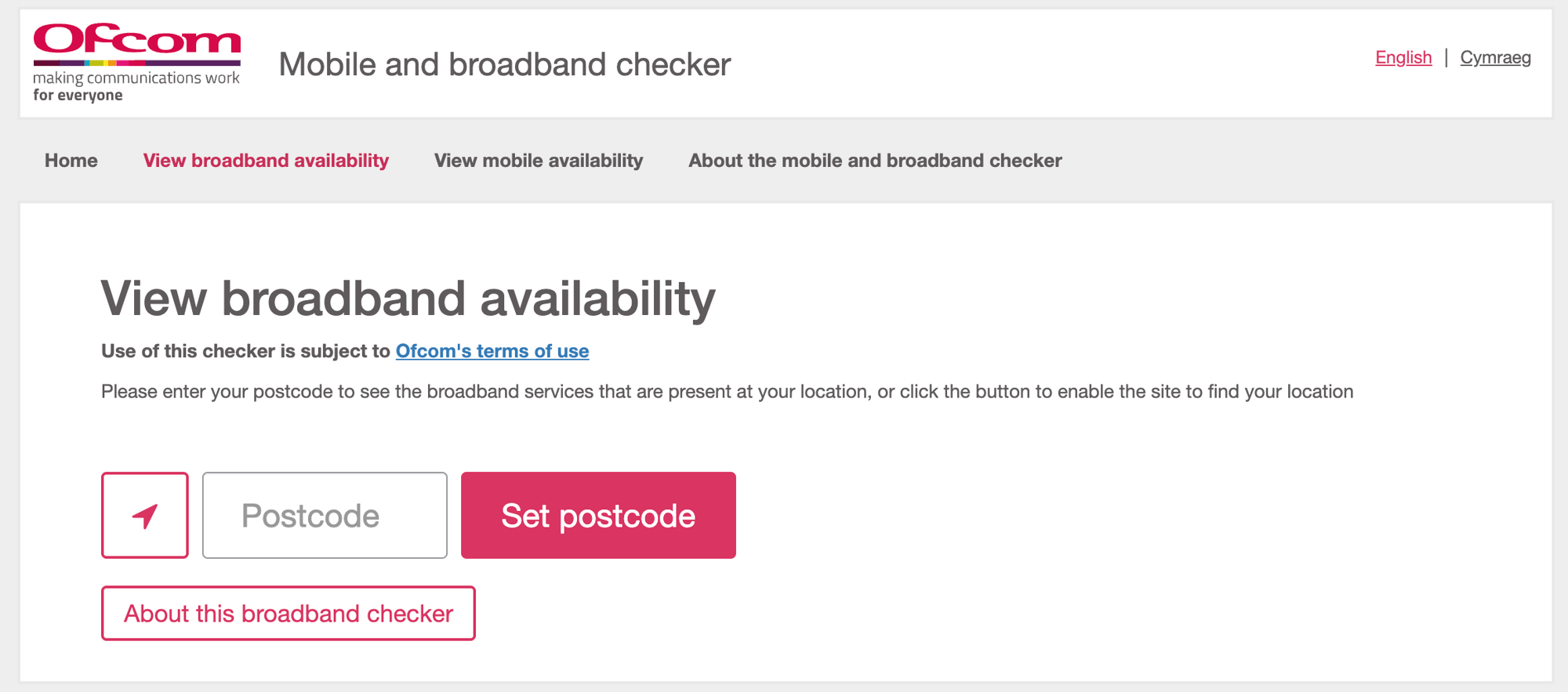
When setting up your broadband, you’ll need to check who covers your area on the Ofcom broadband availability tool. With this shortlist, you can shop around and find the best broadband deal for your needs.
🗓️ Contract length
Broadband contracts are usually 12, 18, or 24 months, or you can find rolling contracts, which tend to be more expensive. Shorter contracts are typically the most expensive. If you’re a homeowner, or certain you’re not leaving your rented accommodation for a long time, you can save by signing a longer contract.
If you’re renting and know you’ll be moving in less than a year, long-term deals can be expensive in the long run, even if the monthly payment is lower. Ending a contract early usually comes with exit fees or ongoing charges for broadband ‘til the end of your contract.
⬆️ A note on broadband price increases
Most UK suppliers increase broadband prices every year in March/April in line with the Consumer Price Index (CPI) plus 3.9%. That was usually an average of £3-£4 a month on your direct debit. But that’s recently changed.
In 2025, Ofcom brought in a new ruling in ‘pounds and pence’ price rises to ban telecoms providers from increasing prices mid-contract based on a percentage. Now, companies need to provide a clear pounds-and-pence figure for the price increase at the point of sale. This means you’ll know exactly how much your contract will increase each spring. It’s usually around £3 per year, but check your contract for specific costs.
One of the major factors affecting average broadband costs is speed. So how much does each broadband speed typically cost?
Let’s take a look at the comment tiers of broadband and their average prices per month via direct debit.
|
Broadband type |
Typical speeds |
Who it’s best for |
Average monthly cost |
|
Standard Fibre |
35–70 Mbps |
1–2 person households |
£18–£26 |
|
Ultrafast & Full Fibre |
100 Mbps–1 Gbps |
Shared homes and heavy users |
£20–£55 |
|
Mobile Broadband (5G) |
130–240 Mbps |
Renters and short-term lets |
£16–£22 |
The 'hidden' cost of ADSL
Older ADSL broadband often costs more for lower service quality. These copper-line connections are usually slower and less reliable, but can be priced similarly to fibre deals. If you’re still on ADSL, check if fibre is available at your address; switching could mean better speeds for the same or lower monthly cost.
Your monthly direct debit is just one part of your budget. If you’re moving house or switching provider, keep in mind that there could be extra costs when setting up your broadband.
- Activation & shipping: Most major ISPs (Internet service providers) offer £0 setup, but smaller providers may charge £20–£60 upfront.
- Hardware & boosters: ‘Whole Home Wi-Fi’ add-ons can cost £5–£10 extra per month. They’re useful for larger homes, but often unnecessary in flats or smaller rentals.
Here are some things to consider whether you’re renting or buying:
Renter’s broadband factors
- Broadband included in your rent? It’s rare, but some landlords (especially in student housing) include broadband in your rent. Double check your tenancy agreement before signing up with a supplier.
- Installation permission: An engineer could need to drill into the walls or fit an external box. It’s a good idea to get permission from your landlord, but it’s usually not an issue. Good internet service adds value to the property.
- Cancellation fees: If you sign a broadband contract that’s longer than your tenancy, and you move out at the end, you often have to pay an early exit fee.
Homebuyer’s broadband factors
- Installation work: Full Fibre installations can involve drilling or external boxes. You won’t need permission unless you own a leasehold rather than a freehold, in which case it’s a good idea to check with the freeholder. This usually isn’t an issue. Good internet is an asset to the property.
- Infrastructure upgrades: Some homeowners choose to pay for full-fibre installation or line upgrades if their property isn’t already connected, which can involve one-off costs.
- Provider choice limitations: Some new-builds or estates are tied to exclusive fibre providers, which can limit competition and keep prices higher.
No, London broadband is often the same price or even cheaper than in other majority cities.
Cities like London, Manchester and Birmingham benefit from strong competition between alternative networks (Alt-Nets) such as G.Network and Community Fibre. This competition pushes prices down, meaning faster speeds can actually be cheaper in bigger cities than elsewhere.
In rural areas, there are often far fewer choices because of the limited infrastructure. This means households are forced onto slower standard fibre or more expensive satellite options, which can increase costs despite lower advertised speeds.
You don’t always need to change providers to cut costs. A few smart tactics can make a noticeable difference:
- The “haggle” factor: If you’re out of contract, let your provider know you’re planning to leave can often unlock retention discounts or new deals. Many providers will offer a lower monthly price to keep you, sometimes matching new-customer deals.
- Cashback sites: Using platforms like Quidco or TopCashback can reduce your effective broadband cost by £50–£100 over the length of a contract. The monthly price stays the same, but the cashback can partially offset what you’re paying.
If you’re reading this guide you could be in the midst of sorting the bills for your house move. If you want to save time and simplify your finances, you can sort broadband and all the major utilities for your new home with a One Utility Bill package.
One Utility Bill combines your monthly payments for broadband with energy, water, and TV licensing into one easy payment. And the team will set you up with your chosen utilities too freeing you up for…everything else you need to sort.
Choose broadband from BT, Sky and Virgin Media, with a range of speeds and deals to suit any budget.
One Utility Bill handles setup, switches, and close-downs, so you don’t need to deal directly with broadband providers or energy companies when you move in or out.
Prefer to keep your finances separate, or living in a house share? You can choose the bill splitting option when you create your package, and everybody will pay an equal share each month. This can avoid awkwardness over missed payments and owed money, and removes the stress of handling the bills from one person.
One Utility Bill packages include energy as standard, with the option to add the utilities you need. Choose Unlimited Energy for extra peace of mind and a predictable cost with no surprises.