

Quick links:
- What counts as a utility bill in the UK?
- Do utility bills affect your credit score?
- “Optional” but essential bills: Council tax, broadband, and mobiles
- Credit cards, loans, and Klarna (BNPL)
- What can you use instead of a utility bill for proof of address?
- How bills packages simplify moving and budgeting
A utility bill is a regular payment for the services you need to keep your home running. These essentials include electricity, gas, and water, but can also cover broadband or TV packages depending on your setup.
Keeping your utility bills organised helps you keep on top of household costs. This guide covers the types of utility bills, as well as bills that don’t fall under ‘utilities’ but are still in most peoples' budgets.
If you want more predictable payments and less admin, roll your utility bills into a monthly bills package with One Utility Bill. Sort your energy, water, broadband and TV services all in one, and pay one easy monthly Direct Debit each month.
or keep reading to find out more about utility bills.
“Utility bill” refers to the essential services you need to keep your home running. The main utility bills are electricity, gas, and water and/or sewerage services.
It’s the same with council tax and TV licences. These are statutory charges rather than utility services, but they’re still essential household bills that most tenants and homeowners need to budget for.
Here’s a quick breakdown of the difference:
|
True utility bills |
Other household bills |
|
Electricity |
Broadband |
|
Gas |
Landline phone |
|
Water and sewerage |
TV packages |
|
Council tax |
|
|
TV Licence |
Utility bills and your rights
Understanding the different types of bills can help you know your consumer rights. Each service has its own regulator. For example, energy suppliers are regulated by Ofgem, while Ofcom oversees broadband and telecoms providers (broadband, phones, etc.). These regulators set rules that providers follow to protect consumers and keep things fair.
People often think that simply paying your utility bills automatically improves your credit score, but it’s a bit more complicated than that.
❌ Myth: Paying utility bills always builds your credit score
In most cases, regular payments for utilities like gas, electricity, and water don’t automatically appear on your credit report or improve your credit score.
Utility accounts usually aren’t treated like credit products, so on-time payments often aren’t shared with credit agencies.
✅ Truth: Missing payments can still hurt your credit
While regular payments may not always help your score, missed or late payments can definitely cause problems. Many providers in the UK report a missed payment to credit agencies after 30 days, which can cause your credit score to drop.
If utility bills go unpaid for too long, providers may turn them over to debt collection agencies or take legal action. In serious cases, this can result in a County Court Judgment (CCJ), which can stay on your credit file for six years.
✅ Truth: Some services can help build your credit history
If you have a limited credit history, some tools now allow you to use regular household payments to support your credit profile.
For example, services like Experian Boost can factor in things like utility bills, streaming subscriptions, and rent payments. However, these schemes are optional, and the information is usually visible only within that provider’s own scoring system, not across all lenders.
✅ Truth: Some household accounts can trigger credit checks
It’s also worth knowing that certain household services can involve a hard credit check when you apply. This is especially common with post-pay mobile phone contracts and broadband contracts. A hard credit check is a full search of your credit history by a provider, and stays on your credit history to show you’ve applied for credit.
Opening several new accounts in a short period can temporarily affect your credit score, so it’s worth spacing out applications where possible.
Utility bills are just some of the things you need to budget for. There are other costs that both homeowners and renters need to factor into their monthly outgoings.
Council tax
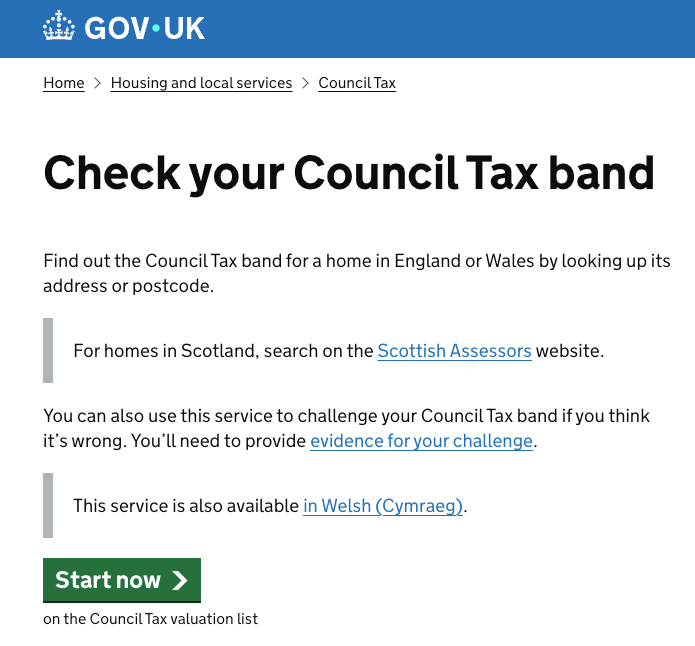
Council tax isn’t technically a utility bill, but it’s still one of the biggest household costs for many people. The amount you pay depends on your property’s council tax band and where you live in the UK. You can find out your council tax band on the GOV.UK website.
Some people may qualify for discounts or exemptions, including full-time students (exempt), single occupants (25% discount) and certain low-income households (variable).
Because council tax is a legal charge, missing payments can lead to fines or enforcement action much more quickly than some other household bills.
“Optional” bills: broadband and mobile contracts
Broadband and mobile phone contracts are sometimes described as optional household bills, but in reality, they are now essential costs in most people’s budgets. They’re also included in the Office for National Statistics’ cost of living calculations.
These contracts are regulated differently from energy bills and often involve fixed-term agreements, credit checks, price increases, and early exit fees.
Prices and contract lengths can vary a lot between providers, so it’s worth comparing broadband deals carefully before signing up. Our guide to average broadband prices is a good starting point.
Subscriptions and non-essential expenses
On top of your essential bills, you may also pay for subscription services and other lifestyle expenses each month, such as streaming services, gym memberships and gaming subscriptions.
These smaller monthly costs can quickly add up, so it’s worth reviewing subscriptions regularly.
Credit cards, personal loans, and Buy Now, Pay Later (BNPL) services like Klarna are not utility bills; they’re formal credit agreements.
This means they have a much bigger impact on your credit score. Making payments on time can help build a positive credit profile, while missed payments can seriously damage your score across major credit reference agencies like Experian and Equifax.
Some BNPL providers only carry out soft credit checks when you apply, which won’t affect your score. However, missed payments are increasingly being reported to credit agencies, which could affect your credit score.
The rules around BNPL are also changing in the UK. Starting 15th July 2026, the Financial Conduct Authority (FCA) will formally regulate many Deferred Payment Credit services. This is expected to introduce stricter affordability checks and more consistent credit reporting across BNPL providers.
Missing repayments can damage your credit score and make future borrowing harder.
If you live in a house share or your bills are included in your rent, you might not have a utility bill in your own name. There are a few other documents that can usually be used as proof of address instead.
Most organisations ask for a document dated within the last three months that clearly shows your full name and current address.
These are commonly accepted alternatives:
- a recent bank statement
- a credit card statement
- a council tax bill
- a HMRC tax letter or notification
- a valid UK driving licence
- an official government letter
These documents are commonly accepted by banks, landlords, universities, and other organisations to confirm your address.
Mobile phone bills aren't usually accepted for higher-level identity or address checks because they’re considered easier to change. Broadband bills are sometimes accepted, depending on the organisation and type of account.
If you’re moving home, setting up your bills early and making sure at least one account is in your name can make future address checks much easier.
Moving house is stressful, and setting up household bills can take up precious time. Rolling your bills into one monthly payment can make budgeting and moving much simpler.
Bills packages are particularly useful if you prefer to keep your finances separate from your partner, or in shared houses to split costs equally between housemates. In both instances, no one is left chasing payments or managing all the bills alone.
Packages with fixed energy tariffs can help make your monthly outgoings more predictable. Before signing up, it’s always worth checking what’s included, whether there are fair use policies for “unlimited” services, and if any exit fees apply.
If you want a simpler way to manage your household bills, One Utility Bill can bundle your energy, water, broadband, and more into one easy monthly payment.